 ThinkMoms
How to Care for Yourself Postpartum With No Help | ThinkMoms
No family nearby, no paid help? You can still recover well. A practical plan for postpartum with no help: food, sleep, the house, and finding your people.
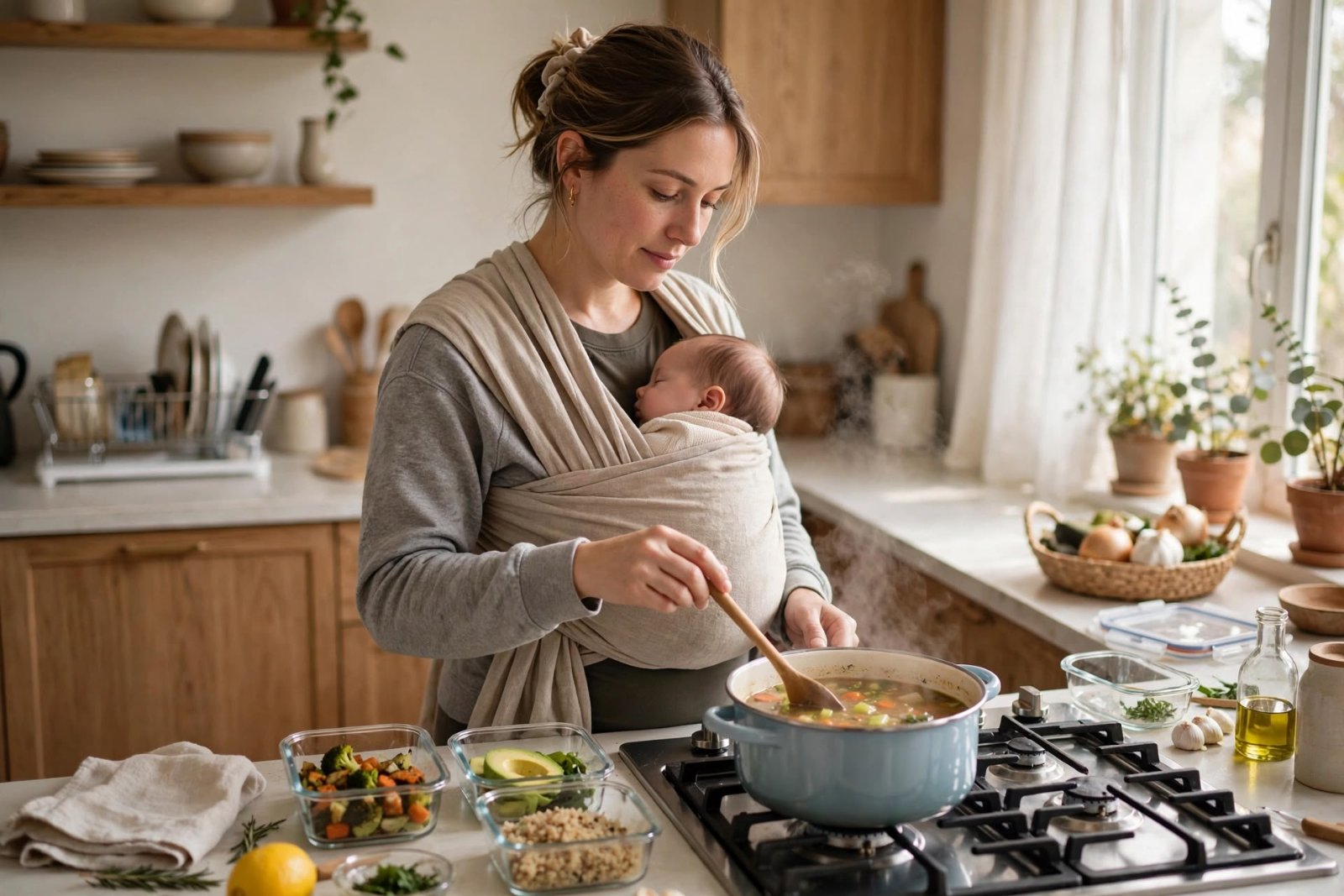
How to care for yourself postpartum with no help
No mom nearby. No auntie flying in. No money for a helper. Just you, a new baby, and a house that keeps needing things.
If that is your situation, first hear this: you are not doing it wrong, and you are not alone in it — even if it feels that way at 3 a.m. Plenty of mothers recover well without a built-in support system. They do it with a plan, not with superpowers. Here is the plan.
Lower the bar on purpose
The first rule of postpartum with no help is: the house does not get your best. You do.
Let the house go. Dishes in the sink, laundry in a pile, floors unswept — none of that is failure. It is evidence that you are spending your energy on the two things that matter: healing and the baby.
Shrink your standards to survival level. Clean enough, fed enough, rested enough. "Enough" is the goal for these weeks, not "impressive."
Say no to visitors who need hosting. Anyone who comes should bring food or hold the baby — not expect tea and conversation. It is okay to say "not yet" to everyone else.
Sleep: take it in shifts, even solo
Sleep is the single biggest factor in how you feel, and it is the hardest thing to get alone. Work it anyway:
Sleep when the baby sleeps — at least once a day. Not every time (you need to eat and shower too), but protect one real sleep window daily.
One uninterrupted block matters most. If you have a partner, trade nights: one of you takes the first half, the other takes the second. Even one 3–4 hour stretch changes everything.
Make nights boring. Low lights, no phone scrolling, no chores. Night is for feeding and sleeping back, nothing else.
Nap without guilt. A 20-minute nap while the baby naps is not lazy. It is medicine.
Food: feed yourself like someone is caring for you
You cannot recover on skipped meals. With no one cooking for you, food has to be simple and ready:
Cook once, eat three times. One-pot meals, soups, stews — make a big pot, eat it for days. This is the solo version of the freezer meals grandmothers used to stock.
Stock one-handed food. Nuts, fruit, granola bars, cheese, crackers — things you can eat while holding a baby, for the night feeds.
Accept every offer. If anyone — neighbor, coworker, church member — offers food, say yes immediately. If nobody is offering, start a free meal train online and share it. People love a concrete way to help; they just need to be asked.
Water where you feed. A bottle that lives in your feeding spot. Dehydration makes exhaustion worse, and you will forget to fetch it otherwise.
The house: systems, not effort
You cannot clean a house and recover from birth at the same time. So build tiny systems:
One basket for laundry, one for everything else. No sorting, no folding marathons. Clean clothes live in the basket for now.
A rest station. Your bed or chair, with charger, water, snacks, and muslin cloths within reach. Everything you need, no getting up.
One chore a day, max. Monday: one load of laundry. Tuesday: wipe the kitchen. That is it. The rest waits.
Build your people, one person at a time
"No help" usually means "no help yet." People appear when they are asked specifically:
Ask one specific thing of each person. "Can you drop off dinner Thursday?" works. "Let me know if you need anything" does not — so flip it: tell people exactly what you need.
Find one mom friend. Library story times, local mom groups, and online communities like ThinkMoms are where you find someone who understands the 3 a.m. feed. One real mom friend changes the whole season.
Let the community carry what family would have. That is literally why ThinkMoms exists — mothers showing up for each other from wherever they are.
When to ask for more help
Doing it alone is hard; struggling alone is not required. If low mood, anxiety, or trouble bonding lasts beyond two weeks, talk to your doctor or midwife. In the US, the National Maternal Mental Health Hotline (1-833-943-5746) is free, confidential, and answered 24/7. Asking for help is part of taking care of yourself.
Come just as you are
No help does not mean no care. Join the ThinkMoms community — mothers who show up for each other, from wherever you are.
Questions about postpartum with no help
Can you recover well postpartum with no help?
Yes, with a plan: protected sleep, simple ready food, lowered house standards, and one or two people asked for specific help. Recovery looks different without a support system, but it is absolutely possible.
What is the most important thing when you have no help?
Sleep and food. Protect one real sleep window a day and keep yourself fed with simple, ready meals. Everything else can wait.
How do I ask for help when I have no family nearby?
Be specific and small: one meal, one errand, one hour of baby-holding. Ask friends, neighbors, faith communities, and coworkers — and try a free meal train link you can share widely.
What if I can't afford paid help?
Focus on the free pieces: one-pot meals, a meal train, a mom friend, community groups, and a rest station at home. Many mothers do postpartum entirely from these.
This page is general information, not medical advice. If you are worried about your health or your baby's health, please speak to your doctor, midwife or local emergency service.
You do not have to do this alone.
Join ThinkMoms freeFollow ThinkMoms