 ThinkMoms
How to Do Omugwo Without Family Nearby | ThinkMoms
No grandma nearby? You can still do omugwo. A step-by-step guide to postpartum care without family: food, rest, help with the baby, and where to find it.
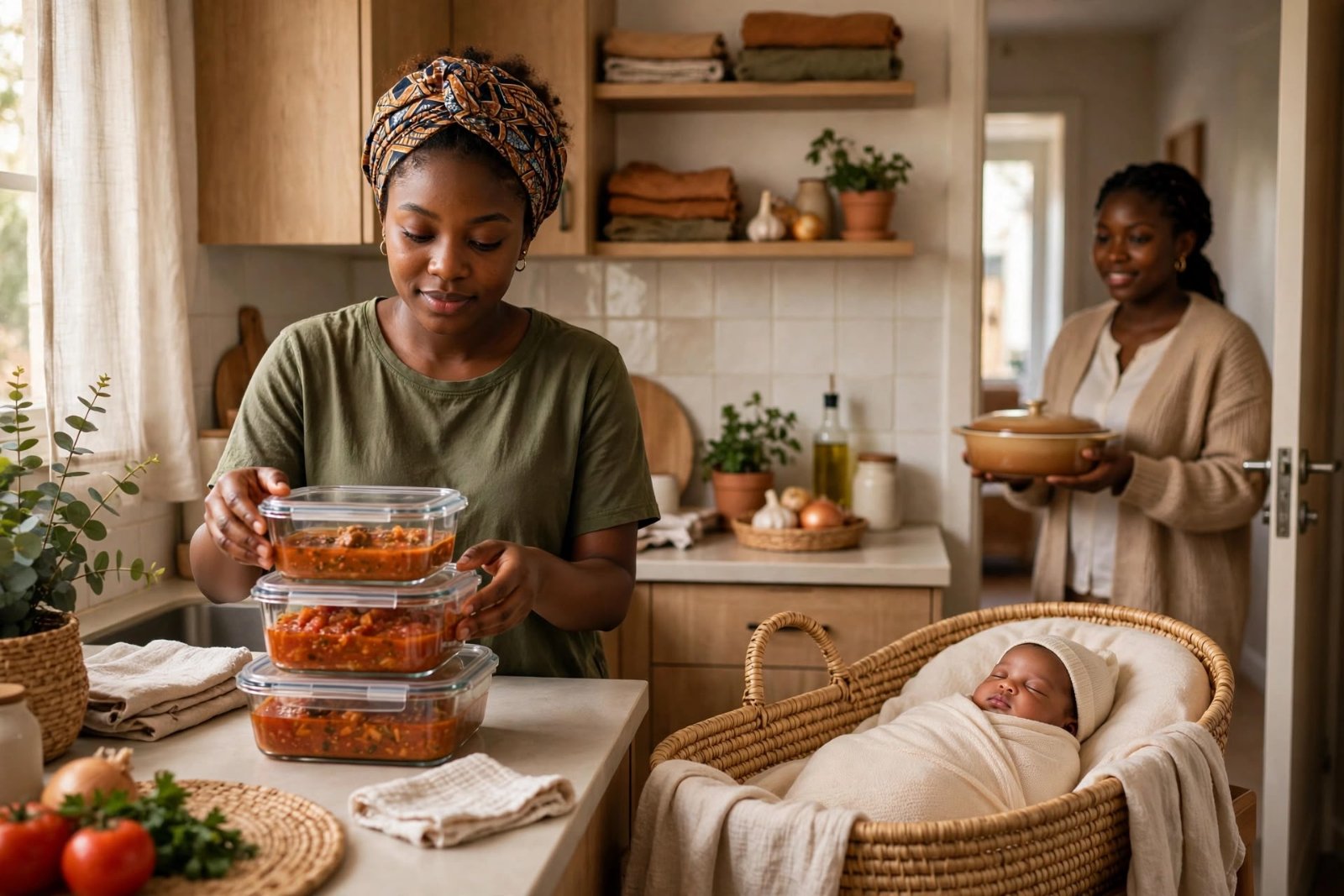
How to do omugwo without family nearby
Omugwo is the Nigerian tradition of postpartum care: an experienced woman comes to stay, cooks, helps with the baby, and holds the household together so the new mother can rest and heal. It is one of the wisest things any culture has ever done for new mothers.
But what if there is no one who can come? No grandmother, no aunt, no family in the same country — or even the same state?
You are not out of options. You are just doing omugwo on purpose, one piece at a time. Here is how.
Before the baby comes: set up your care
1. Decide who your people are.
Make a list: your partner, friends, neighbors, church or mosque members, coworkers. Next to each name, write one thing they could realistically do — bring a meal, hold the baby for two hours, drive you to an appointment. Asking one specific thing of each person is easier than asking one person for everything.
2. Stock your kitchen like a grandmother would.
Cook and freeze in the last weeks of pregnancy: pepper soup, stews, soups, anything warm and nourishing that reheats well. Buy pap ingredients, yam, and the staples your family eats after birth. Your future self — tired, holding a baby — will be so glad you did.
3. Book help if you can.
A postpartum helper, a doula, a cleaning service, a mother's helper from your neighborhood — even a few hours a week changes everything. If money is tight, a one-time deep clean before birth plus a laundry service in the early weeks is a smaller way in.
4. Make your rest plan official.
Write it down and tell your partner: the first weeks are for recovery, not for hosting visitors, not for "bouncing back." Rest is the job. When it is written down, it is harder to talk yourself out of it.
The first two weeks: protect them
Sleep in shifts. If you have a partner, take turns with night feeds — even one uninterrupted block of 3–4 hours each night protects your mood and health.
Accept every meal. Say yes to every casserole, every food delivery, every drop-off. If nobody is offering, start a free meal train online and share it — people love a concrete way to help.
Let the house go. Dishes in the sink do not mean you are failing. They mean you are recovering. Visitors who judge are not the village.
Stay in contact. A daily check-in call or text with a friend, a sister, your mom — staying connected fights the isolation that makes the early weeks feel so long.
The first months: keep the support going
Find your mothers. Mom friends are not a luxury — they are part of the care plan. Library story times, local mom groups, and online communities like ThinkMoms are where you find people who understand the 3 a.m. feed and the weepiness after.
Keep the food coming. When the freezer meals run out, keep it simple: rotisserie chicken, frozen vegetables, one-pot meals. Nourishment beats impressiveness every time.
Know when to ask for more help. The baby blues — weepiness in the first two weeks — are common and usually pass. If low mood, anxiety, or trouble bonding lasts beyond two weeks, talk to your doctor or midwife. In the US, the National Maternal Mental Health Hotline (1-833-943-5746) is free, confidential, and answered 24/7. Asking for help is part of taking care of yourself.
Come just as you are
No family nearby does not mean no care. Join the ThinkMoms community — mothers who show up for each other, from wherever you are.
Questions about doing omugwo without family
Can you do omugwo without your mom or family?
Yes. Omugwo is a principle — rest, nourishing food, and help with the baby and household — not a rule that only one person can provide. Paid helpers, friends, community meal trains, and video calls with family can rebuild the same care.
What is the most important part of omugwo to keep?
Rest and food. If you protect the new mother's sleep and make sure she eats warm, nourishing meals she didn't have to cook, you have kept the heart of the tradition.
How do I ask friends for help after birth?
Be specific. "Can you drop off dinner Thursday?" works better than "let me know if you need anything." Most people want to help and are relieved to be told exactly how.
What if I can't afford paid help?
Focus on free pieces: freezer meals before birth, a meal train, friends holding the baby while you sleep, and community groups. Many mothers do omugwo entirely from these.
This page is general information about a cultural tradition, not medical advice. If you are worried about your health or your baby's health, please speak to your doctor, midwife or local emergency service.
You do not have to do this alone.
Join ThinkMoms freeFollow ThinkMoms