 ThinkMoms
Omugwo in America: Postpartum Care When Mom Can't Come
Your mom can't fly in for omugwo? You're not alone. How African moms in America rebuild the postpartum village — real help, real food, real rest.
Omugwo in America: when your mom can't come
In Nigeria, omugwo starts with a phone call: "Mama, the baby is on the way." And she comes. She moves in, takes over the kitchen, holds the baby, holds the house, and you — you rest and heal.
In America, that call is more complicated. The visa gets denied. The flight costs two months' salary. Her leave from work doesn't cover it. Or she comes for the birth but has to fly home too soon.
If this is your story, hear this first: omugwo is not canceled because your mom couldn't come. It just looks different. And thousands of African moms across America are figuring out the different — every single day.
What changes — and what doesn't
The heart of omugwo never changes: rest for the mother, food that restores her, and someone carrying the household load while she heals.
What changes in America is the cast. Instead of one grandmother staying for three months, the care comes in pieces. Each piece still counts.
Building omugwo in America: the pieces that work
Start before the baby comes.
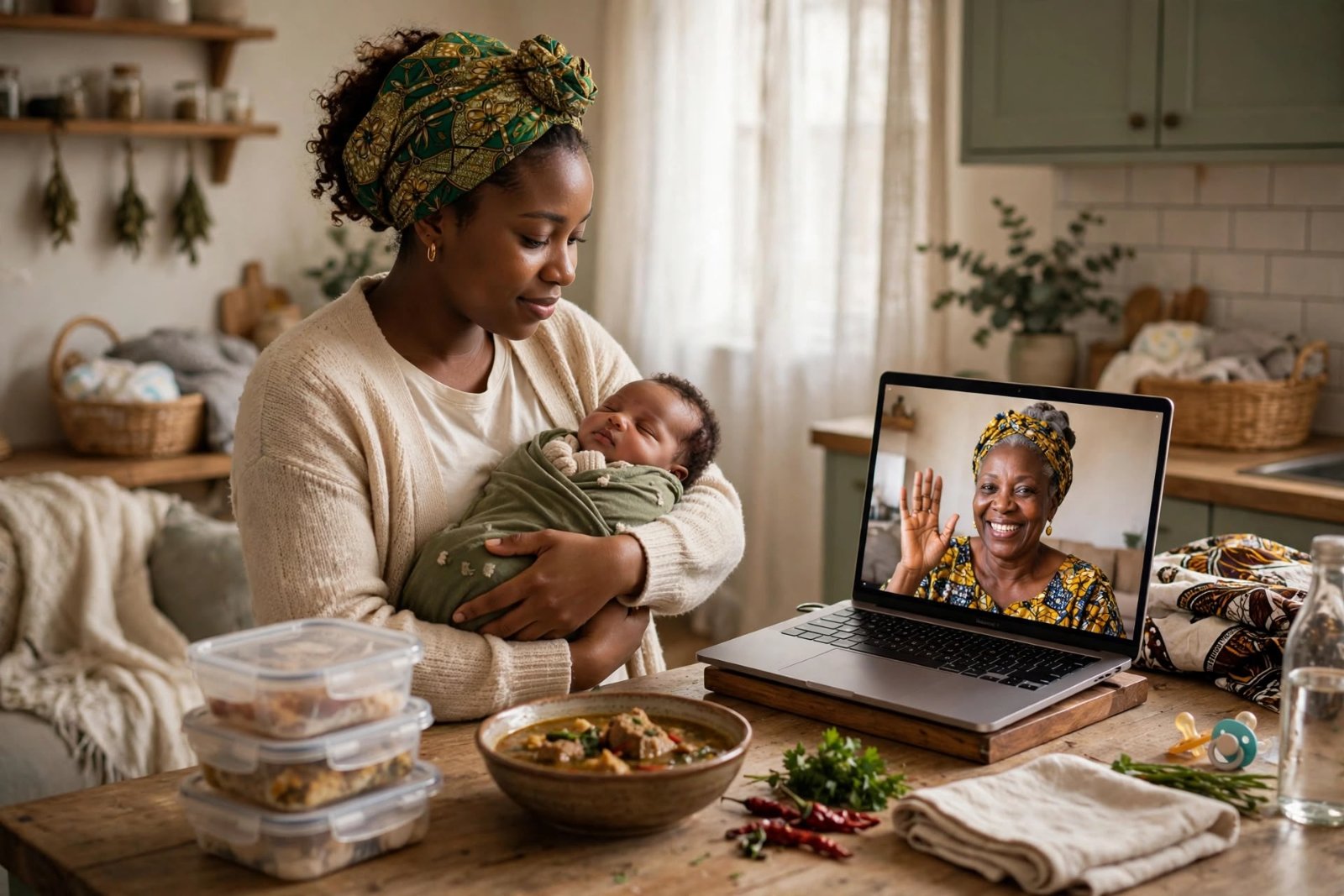
Cook in bulk and freeze meals: pepper soup, stew, soups. Your own version of the omugwo kitchen, ready in your freezer.
Line up paid help for the first two to four weeks if you can — a postpartum helper, a doula, or even a cleaning service for the heavy housework.
Tell friends exactly what you'd need: "Can you drop off a meal on Thursdays?" Specific asks get yeses.
Make the first weeks count.
Rest is the job. Laundry piles can wait; your recovery cannot.
Set up a meal train with church, mosque, friends, or neighbors. People want to help — give them a door to walk through.
Sleep in shifts with your partner if you have one. Protect at least one solid block of sleep each day like it is sacred. It is.
Bring home into it.
Video calls with your mom or aunts every day. It is not the same as having her there, but the advice, the recipes, the voice telling you "you are doing well" — it matters more than you think.
Ask your mom to walk you through her pepper soup over video. Do it together. Some moms say this is the part that made them cry and made them feel held.
Borrow a village.
Find mom friends in the same season — library story time, mom groups, your church or mosque, your neighborhood.
ThinkMoms circles connect you with mothers who share your heritage and your questions, anonymously, from your own couch.
The guilt no one talks about
Many diaspora moms carry two heavy feelings at once: grief that their mom isn't here, and guilt for feeling disappointed when other people are "helping." You can be grateful for your husband's help and still miss your mother. Both are true. That ache is real, and you are not ungrateful for feeling it.
This is still omugwo
Omugwo was never about a specific person. It was never only "my mom does this." It is the principle that a new mother should be surrounded, fed, and given rest. If your support comes from your partner, a friend, a paid helper, a video call, and a community online — that is still omugwo. You are still doing the tradition. You are just doing it the way your life requires.
Come just as you are
Missing home is allowed. Doing it differently is allowed. Join the ThinkMoms community — mothers who get this, from your couch, whenever you need them.
Questions about omugwo in America
Can I still do omugwo if my mom can't come? Yes. The heart of omugwo is rest, nourishing food, and help with the household and baby — not one specific person. Freezer meals, paid helpers, meal trains, video calls with family, and community support can rebuild the same care.
What if omugwo isn't a tradition where I live? That's fine — omugwo is an idea, not a rulebook. You don't need permission or a cultural label to rest after birth, ask for help with meals, or line up support. Take what fits your life.
Who helps if family is far away? Many moms piece it together: a partner or friends, a postpartum helper or doula, church or community meal trains, mom friends, and video calls with family back home. ThinkMoms circles can be part of that support.
Does doing omugwo differently mean I'm doing it wrong? No. Omugwo has always adapted — every family does it a little differently. Doing it your way, in your country, is exactly how traditions survive.
This page is general information about a cultural tradition, not medical advice. If you are worried about your health or your baby's health, please speak to your doctor, midwife or local emergency service.
You do not have to do this alone.
Join ThinkMoms freeFollow ThinkMoms