 ThinkMoms
Omugwo Traditions by Tribe: Igbo, Yoruba, Hausa & More
Omugwo is Igbo, but the care has many names: Ojojo omo (Yoruba), Wanka'n jego (Hausa), Ukaan (Efik & Ibibio). Explore Nigeria's postpartum traditions.
Omugwo traditions by tribe
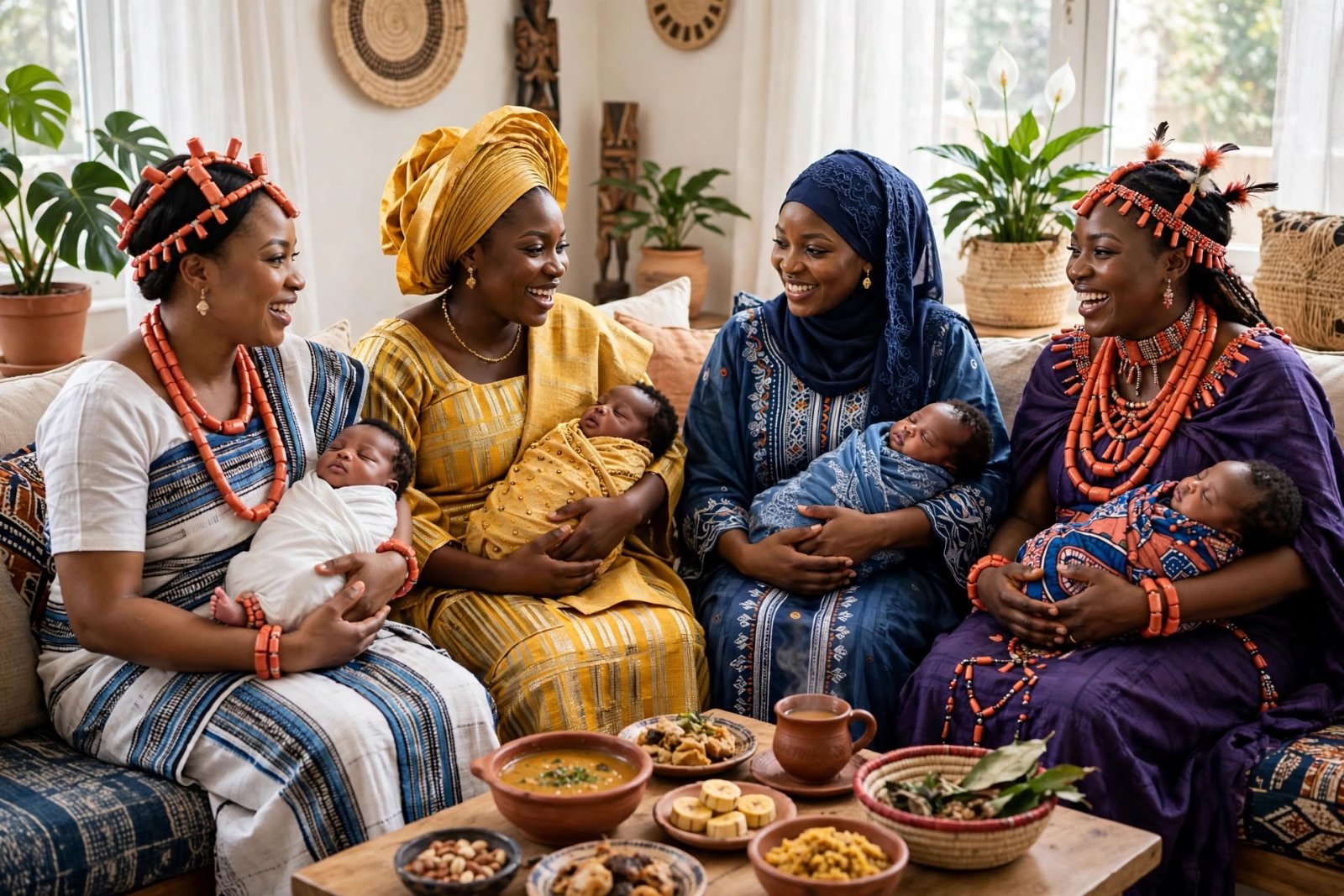
Omugwo is an Igbo word, but the idea it carries belongs to far more than one tribe. Across Nigeria, almost every culture has its own name and its own version of the same truth: the weeks after birth are not a time for a mother to cope alone. She rests. Others carry the load.
Here is how that care looks across Nigeria's major traditions.
Igbo: Omugwo
Omugwo is the Igbo original — and the name ThinkMoms uses, because it says the whole thing in one word. After birth, the baby's grandmother (or an aunt or another experienced woman) comes to stay with the new family, often for several weeks or a few months.
She cooks warm, nourishing meals like pepper soup and pap. She helps hold, bathe, and soothe the baby. She takes over the household — laundry, visitors, the thousand small tasks. In many Igbo families, the care includes warm herbal baths and massage for the new mother, and the grandmother teaches the young mother how to breastfeed and care for the newborn. Through it all, the message is the same: rest, heal, bond. The house is handled.
Yoruba: Ojojo omo
Among the Yoruba, the postpartum care tradition is called Ojojo omo — the caring-for of the child and mother after birth. Like omugwo, an experienced woman (often the grandmother) stays with the family to cook, help with the baby, and free the new mother to recover.
Yoruba postpartum care places strong emphasis on warm, specially prepared foods and traditional herbal preparations for the new mother's strength. The period is also woven into the family's joy — rest and care in the weeks before the naming ceremony, when the baby is formally welcomed.
Hausa: Wanka'n jego
Among the Hausa (and Fulani), the tradition is called Wanka'n jego — the bathing and care of the new mother. It is often observed as a confinement period of about forty days after birth.
During this time the new mother rests while female relatives — often her mother or mother-in-law — care for her and the baby. Special drinks and foods, such as kunu (a nourishing grain drink), are prepared for the mother's strength. The forty days give the mother's body time to recover fully before she returns to her full routine.
Efik and Ibibio: Ukaan
Among the Efik and Ibibio peoples of southeastern Nigeria, the postpartum care tradition is called Ukaan. As with omugwo, experienced women in the family step in to cook special nourishing meals, care for the baby, and take the household's weight off the new mother.
Efik and Ibibio postpartum traditions are known for their rich food culture around the new mother — hearty, warming dishes meant to restore her strength — alongside the same core promise found everywhere in Nigeria: she rests, they carry.
The same heart, wherever you are
Different names, different foods, different details — but walk into any of these homes in the weeks after a birth and you will see the same thing: a new mother who is being fed, helped, and told to rest. The tradition bends to fit each family, each city, each country. That is why it has survived.
And it is why ThinkMoms exists: to bring this care — whatever you call it — to mothers everywhere, in every country and from every background.
Come just as you are
Whatever you call it — omugwo, ojojo omo, wanka'n jego, ukaan, or just "the help I wish I had" — you deserve this care. Join the ThinkMoms community.
Questions about omugwo traditions by tribe
Is omugwo only an Igbo tradition?
The word omugwo is Igbo, but the practice of caring for a new mother after birth exists across Nigeria under different names — including Ojojo omo (Yoruba), Wanka'n jego (Hausa), and Ukaan (Efik and Ibibio).
What is Ojojo omo?
Ojojo omo is the Yoruba tradition of postpartum care, where an experienced woman stays with the new family to cook, help with the baby, and let the new mother rest and recover.
What is Wanka'n jego?
Wanka'n jego is the Hausa tradition of postpartum care, often observed as a confinement period of about forty days, during which female relatives care for the new mother and baby while she recovers.
What is Ukaan?
Ukaan is the Efik and Ibibio tradition of postpartum care in southeastern Nigeria — experienced women cook nourishing meals, help with the baby, and carry the household load so the new mother can rest.
This page is general information about cultural traditions, not medical advice. If you are worried about your health or your baby's health, please speak to your doctor, midwife or local emergency service.
You do not have to do this alone.
Join ThinkMoms freeFollow ThinkMoms