 ThinkMoms
What Is Omugwo? Nigerian Postpartum Care Tradition, Explained | ThinkMoms
Omugwo is the Nigerian tradition of postpartum care — an experienced woman comes to stay, cook, and hold the home so the new mother can rest and heal. Learn the meaning, practices, and how long it lasts.
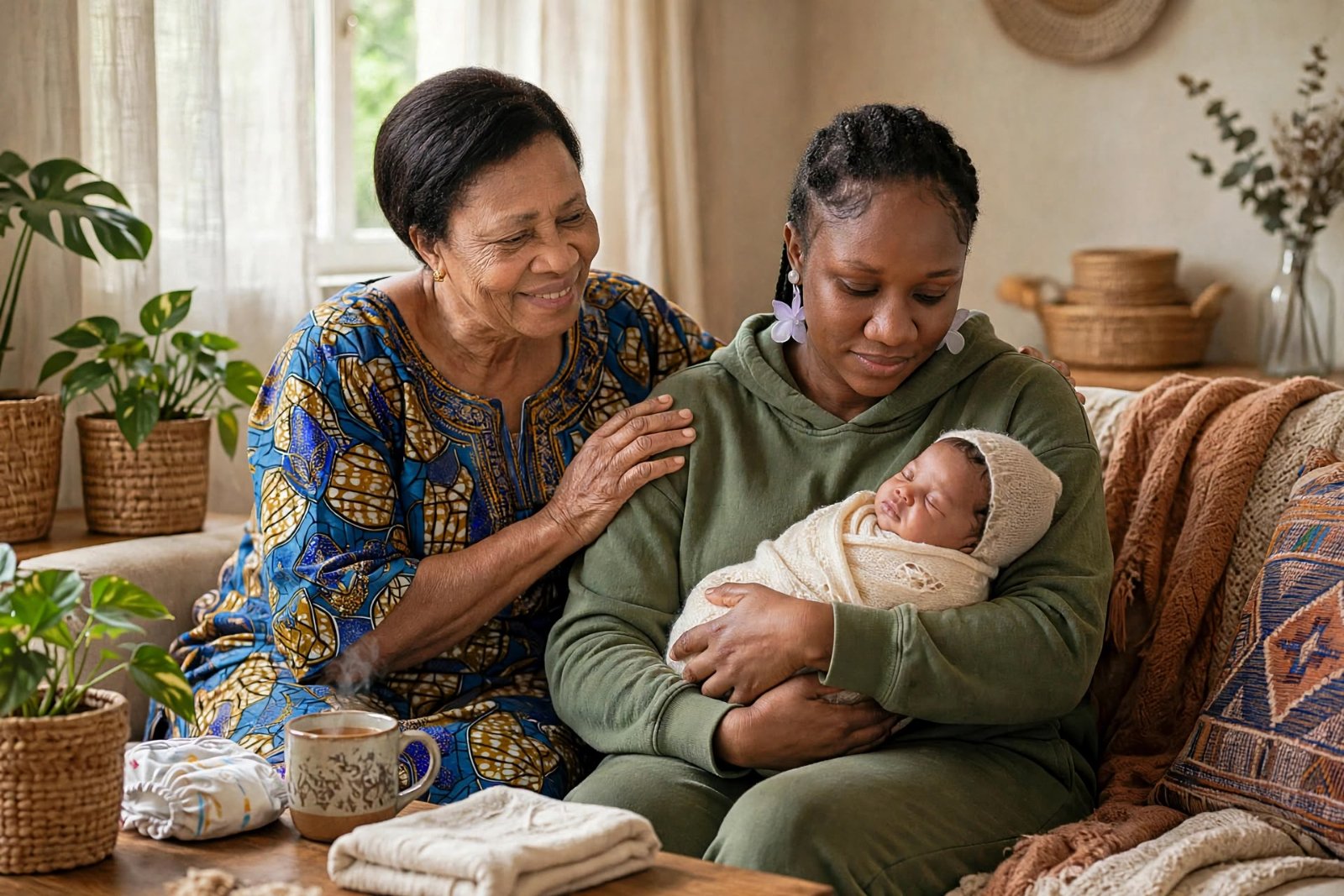
What is Omugwo? No mother heals alone.
Omugwo is the Nigerian tradition of caring for a mother after she gives birth. Someone experienced comes, stays, cooks, holds the baby and holds the home together, so the new mother can rest and heal.
ThinkMoms was inspired by it, and it is for every mother, wherever she lives and wherever she comes from.
What does Omugwo mean?
Omugwo is an Igbo word for the postpartum care tradition of looking after a new mother and her baby in the weeks after birth. An experienced woman, often the baby's grandmother, comes to stay with the family. She cooks warm, nourishing food, helps with the baby, and takes the weight of the household off the mother, so the mother can focus on recovery and bonding with her newborn.
The word itself carries the whole idea: the weeks after birth are not a time for a mother to cope alone.
Where Omugwo comes from
Omugwo is an Igbo word, and the practice is loved across Nigeria. The idea is simple and old: the weeks after birth are not a time for a mother to cope alone. The family steps in, and the mother is looked after so that she can look after her baby.
Usually it is the baby's grandmother, an aunt or another experienced woman who comes to stay with the new family. How long she stays differs from family to family. Many stay for several weeks, and some for a few months.
How long does Omugwo last?
There is no fixed length. Most families practice omugwo for the first four to six weeks after birth — the core postpartum recovery period — and many continue for two to three months. Some grandmothers stay longer if the mother needs more support. The tradition bends around the mother's needs: healing, rest, and confidence with the baby decide the timeline, not a calendar.
What happens during Omugwo: the practices
Every family does it a little differently, but the practices share a purpose — the mother's postpartum recovery and the baby's care:
Warm, nourishing food. The helper cooks for the mother every day: pepper soup, yam, pap, and other warm meals meant to restore strength. The new mother does not have to think about meals.
Help with the baby. Holding, soothing, bathing, and the many small tasks that fill the day — so the mother can sleep and rest.
Care of the house. Laundry, washing up, tidying, managing visitors.
Rest without guilt. The mother is expected to rest, not to prove she can do it all. Recovery is the job.
Warmth and healing routines. In many families this includes warm herbal baths and massage, believed to help the mother's body recover.
Wisdom and company. The helper shares what she learned raising children, and stays close when the mother feels low or unsure — steady support through the emotional ups and downs of postpartum life.
Omugwo in the diaspora
For many Nigerian mothers living abroad — in the US, the UK, Canada — omugwo takes planning. Grandmothers travel across continents to be there for the birth, or mothers fly home. Visas, flight costs, and work leave can make it hard, and some mothers do omugwo over video calls: advice, recipes, and reassurance from thousands of miles away.
Many mothers today give birth far from the people who would have helped: in a new city, a new country, or simply without anyone nearby who can come. A mother can end up with a new baby, a quiet house and nobody to share the load. That gap is a big part of why the early weeks feel so heavy for so many women.
Postpartum care traditions around the world
Omugwo is one of many traditions that treat the time after birth as a time to be cared for. Different cultures give it different names and customs, but the heart of it is the same: the new mother rests, and others carry the load.
In China, zuo yuezi ("sitting the month") is a period of rest and special care after birth.
In many Latin American communities, la cuarentena is a stretch of rest and support for the new mother.
In Korea, sanhujori is a period of dedicated postpartum care.
In India, many families observe a 40-day confinement with special foods and massage for the new mother.
How ThinkMoms brings this care to you
ThinkMoms was inspired by Omugwo. We bring the same postpartum care to mothers of every background, in every country:
Carers. Experienced mothers who are paid to show up. They help in practical ways, such as cooking, helping around the house and supporting you with the baby.
A community. A space to share honestly and anonymously with other mothers. You are known by an alias, never a name.
Circles. Smaller groups for your stage of pregnancy, your heritage or what is on your heart right now.
It is free for mothers to join ThinkMoms and let us stay with you at every step.
Questions about Omugwo
What does Omugwo mean? Omugwo is an Igbo word for the tradition of caring for a new mother and her baby after birth. An experienced woman, often the baby's grandmother, stays with the family to cook, help with the baby and take the weight of the household off the mother.
How long does Omugwo last?It varies from family to family. Many families keep it up for several weeks, and some for a few months, depending on the mother's needs and what the helper can manage.
What foods are eaten during Omugwo?Warm, nourishing meals meant to restore the mother's strength — pepper soup, yam, pap, and other home-cooked dishes. The guiding idea is warmth and nourishment while the mother's body heals.
Is ThinkMoms only for Nigerian mothers? No. ThinkMoms is for every new mother, in any country and from any background. Omugwo is where the idea started, and the care is for everyone.
Can I get this kind of support if my family is far away? Yes. Many mothers live far from family, in a new city or a new country. ThinkMoms connects new mothers with experienced mothers who are paid to show up, and with a community of other mothers.
This page is general information about a cultural tradition, not medical advice. If you are worried about your health or your baby's health, please speak to your doctor, midwife or local emergency service.
You do not have to do this alone.
Join ThinkMoms freeFollow ThinkMoms