 ThinkMoms
Postpartum Recovery Week by Week: What to Expect | ThinkMoms
Postpartum recovery week by week: what healing, bleeding, sleep, feeding, and mood usually look like in weeks 1 to 6, and how to get through it with or without family nearby.
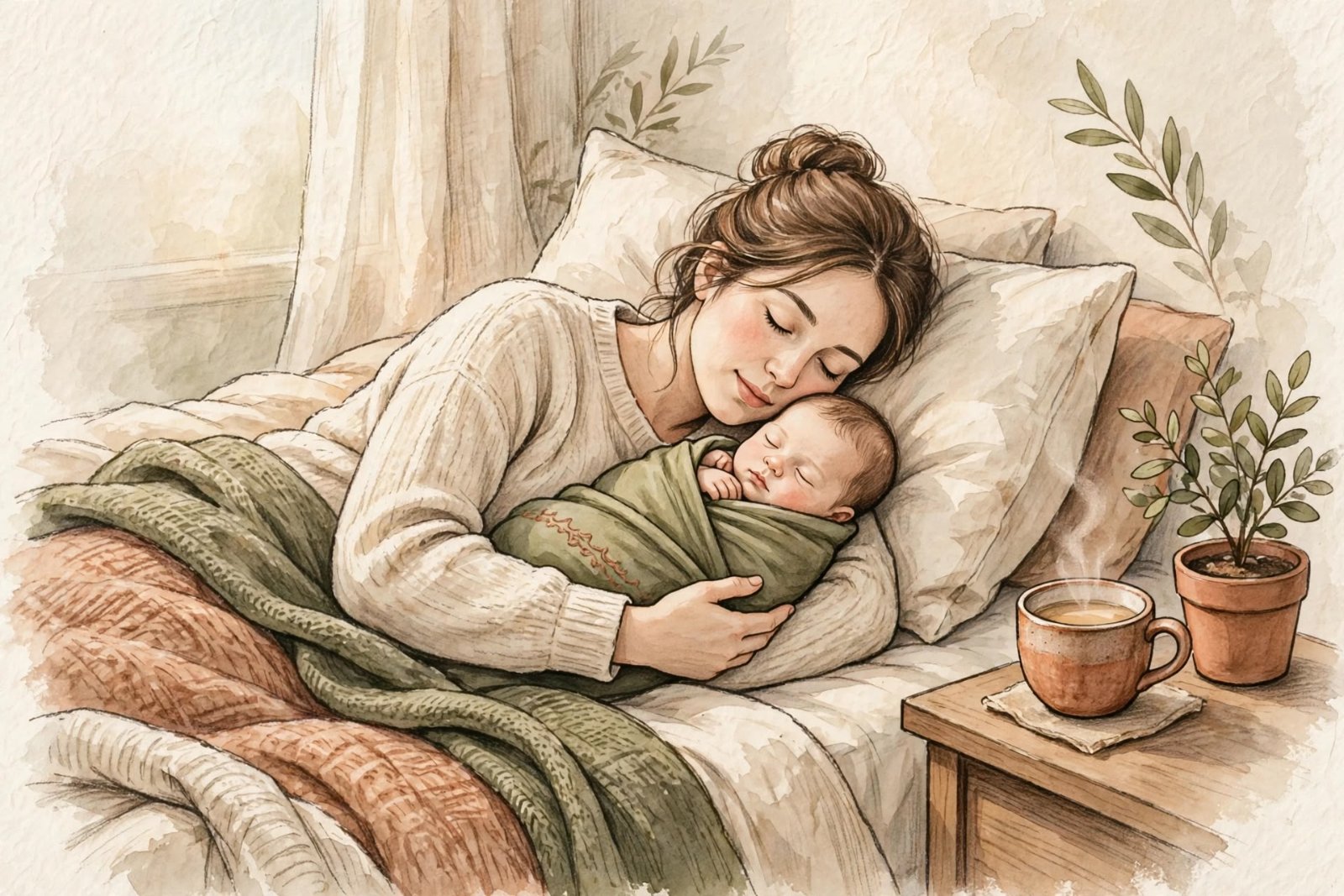
Postpartum recovery week by week: what to expect
Nobody hands you a recovery timeline when you leave the hospital. You get a baby, a bag of pads, and a six-week checkup date, and then you are supposed to figure out the rest. Here is the honest version, week by week, including the parts people skip over.
Recovery is not a straight line. Some days you feel almost normal, then a bad night or a long day sets you back. That is not failure. That is healing.
Week 1: the fog
The first week is survival mode. Your body is doing the heaviest healing it will ever do.
Bleeding. You will bleed, like a heavy period and then some. It is called lochia, and it is the uterus shedding its lining. It is usually heaviest in the first few days, bright red at first, then gradually darker and lighter.
Cramps. Afterpains, especially while feeding, are the uterus shrinking back down. They are strongest in the first days and ease across the week.
Soreness. Whether you had a vaginal birth or a cesarean, you are sore. Sitting, standing, laughing, and going to the bathroom can all sting. Ice packs, pads, and moving slowly are not luxuries, they are the treatment.
Feeding around the clock. Newborns feed often, sometimes every hour, day and night. Cluster feeding in the evening is normal and exhausting.
Sleep in fragments. You will not get a full night. You will get naps stitched together. This is the week to let everything else go.
What helps most in week 1: someone else holding the household. Meals that arrive. Visitors kept short or kept away. Rest as the actual job, not something you earn after chores.
Week 2: the dip
Bleeding usually eases and changes color. Soreness starts to fade, though stitches and cesarean incisions still need care. Milk supply starts to settle, and feeding may find a slightly steadier rhythm, though nights are still broken.
This is also when mood often dips. The baby blues, weepiness, irritability, feeling overwhelmed, peak in the first two weeks for many new moms. It is common, and it usually passes. It does not mean you are ungrateful or failing. It means your hormones are crashing and you are running on empty.
What helps most in week 2: people who check on you, not just the baby. A walk to the end of the street if your body allows it, not a marathon. Lowered expectations everywhere else.
Weeks 3 to 4: rhythms emerge
Feeding stretches a little. The baby may give you one slightly longer stretch of sleep, though nights are still far from normal. Bleeding usually tapers to spotting. Energy comes back in bursts, then disappears again.
This is the trap week: you feel better, so you do too much, then you crash. Healing is still happening even when you feel fine. The rule that protects you is simple: if it increases bleeding or pain, you did too much. Scale back without guilt.
Gentle movement helps many moms now: short walks, slow stretching. Anything that hurts, pulls, or feels wrong is a sign to stop and ask your doctor or a pelvic health physiotherapist, not to push through.
What helps most in weeks 3 to 4: a rhythm, not a schedule. One outing a day at most. Prep done in advance: freezer meals, laundry help, a list of people and one job each.
Weeks 5 to 6: the checkup
Around six weeks, most moms have the postpartum checkup. It is not a finish line, and it is not a test you pass. It is a checkpoint. Bring questions: bleeding, pain, mood, sleep, feeding, pelvic floor, contraception, anything that still feels off.
Bleeding has usually stopped or nearly stopped by now, though some moms spot longer, especially after a cesarean or a complicated birth. Energy is better but rarely back to normal. Sleep is still broken. That is all within the range of normal.
This is also the moment to check your mood honestly. If low mood, anxiety, or trouble bonding has lasted beyond two weeks, or feels frightening, say so at the checkup. In the US, the National Maternal Mental Health Hotline (1-833-943-5746) is free, confidential, and answered 24/7.
If you have no family nearby
The timeline above assumes help. If no one can come to you, build your own version of it, the way omugwo works: protection for the mother, on purpose.
Before birth, if you can: freezer meals, a stocked bathroom station, a list of people and one job each, a meal train link ready to send.
After birth: ask one person for one thing, not one person for everything. A friend on laundry, another on a grocery drop, another on holding the baby while you shower. A mom community, online or local, counts as help too. Rest is not something you do after everything else. It is the recovery itself.
Read more: [What Is Omugwo?](https://thinkmoms.com/blog/what-is-omugwo-nigerian-postpartum-care-tradition-explained-thinkmoms/) and [How to Do Omugwo Without Family Nearby](https://thinkmoms.com/blog/how-to-do-omugwo-without-family-nearby-thinkmoms/)
When to call for help
Call your doctor or midwife promptly, or seek urgent care, if you have: bleeding that soaks a pad every hour for two hours, large clots, fever, severe abdominal pain, a cesarean incision that opens or smells, severe headache or vision changes, or thoughts of harming yourself or your baby. These are not things to wait out.
For mood: weepiness in the first two weeks is common and usually passes. Low mood, anxiety, or bonding trouble lasting beyond two weeks deserves a conversation with your doctor, not silence.
Come just as you are
Recovery has no deadline and no gold medal for doing it alone. Join the ThinkMoms community, mothers who show up for each other, from wherever you are.
Questions about postpartum recovery week by week
How long does postpartum bleeding last?
Usually 2 to 6 weeks. It starts heavy and bright red, then tapers and changes color to pink, brown, and finally yellow-white. Bleeding that suddenly gets heavy again, or soaks a pad an hour, deserves a call to your doctor.
When can I exercise after birth?
Gentle walking is usually fine once you feel up to it. Anything more, especially core work, running, or lifting, is worth clearing at your postpartum checkup, and a pelvic health physiotherapist can guide you back safely.
Is it normal to still look pregnant weeks after birth?
Yes. The uterus takes weeks to shrink, and your body held extra fluid and weight for nine months. It does not snap back on a schedule, and it does not need to.
When should I call my doctor during postpartum recovery?
Promptly for heavy bleeding, fever, severe pain, incision problems, severe headache or vision changes, or thoughts of harm. And at any point for mood that lasts beyond two weeks or feels frightening.
This page is general information, not medical advice. If you are worried about your health or your baby's health, please speak to your doctor, midwife or local emergency service.
You do not have to do this alone.
Join ThinkMoms freeFollow ThinkMoms